While journalism is heading into the doldrums with increasing clamp downs on press freedom, self-censorship, dumbing-down articles for 'quick-take' journalism and widespread use of artificial intelligence, there is a new breed of journalism that is rising from this environment.
Academic journalism is an emerging genre where writers use the skills and intellectual tools from the academic world to research and create pieces of work that explain issues that are important to a general audience, community and society. Put another way, academics whether current or former university faculty members are finding a new outlet for their work to disseminate ideas beyond the restrictive boundaries of academic publications.
The final products of research are not academic journal articles, information is conveyed to the public via more popular writing styles, in mainstream and online media but also in radio, television, film or through other innovative information platforms including short-form and long-form podcasts. The structure of such pieces is a report of research, concluded with opinions based on the results of the research.
Advertisement
Today such journalism can be found in the independent media. Many academic journalists have their own websites, YouTube channels, Substacks, or other mediums such as Rumble.
The growing number of contemporary academic journalists include Heather Cox Richardson, a Boston College history professor on Substack called Letters from an American with millions of subscribers, Glenn Greenwald a Pulitzer-Prize winning, former constitutional lawyer who also runs a Substack, Rumble and YouTube and Victor Baker Hansen, a war historian turned political analyst.
In the United Kingdom the historian David Starky, literature and social theorist and Germain Greer, British philosopher and writer Kathleen Stock and physicist Brian Cox all have significant media presence.
Academic journalists are scholars, writers and scientists who apply their expertise to broader public issues. They come from many disciplines. In science and technology, biologist Richard Dawkins, psychologist Steven Pinker and physicists Brian Greene and Carlo Rovelli are prominent. In politics and social policy political scientist Francis Fukuyama, historian Anne Applebaum and French economist Thomas Piketty have all provided media discourse that has sparked global debate.
Some public intellectuals who have gained notoriety include Canadian psychologist Jordan Peterson and Slovenian cultural critic and philosopher Slavoj Žižek. Both are known for using the insights of their primary field of research for social media commentary on much wider issues of public interest.
Even among the highest echelons Nobel Laureates Paul Krugman and Joseph Stiglitz write daily on economic policy and global trade in mainstream and social media. Perhaps the grandfather of academic journalism is a comrade of one of the writers on The 4th Media, Noam Chomsky who turned from linguistics to social analysis.
Advertisement
The role of academic journalists through social media challenges that of organisations like the British Association for the Advancement of Science (BAAS), founded in 1831 which became the British Science Association (BSA) in 2009 and its counterpart American Association for the Advancement of Science founded in 1848. Even the British Royal Society, the Royal Society of Arts and their counterparts across all fields of intellectual engagement struggle to be relevant.
There are several key areas where academic journalists make a significant contribution. One obvious and important area is in 'explainer articles' which help distil complex ideas into informed and authoritative summaries for a general audience.
Academic journalists also play an important role in providing a critique and challenge of conventional wisdom and in emergency responses where issues emerge quickly and require detailed, immediate clarification. We saw this during the Covid era with Dr John Campbell, who became a world-famous source for daily, informed information on the virus.
Discuss in our Forums
See what other readers are saying about this article!
Click here to read & post comments.




 reddit this
 Del.icio.us
 Seed Newsvine
 StumbleUpon

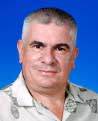 Murray Hunter
 Geoffrey Williams


