2. The Gulf remains central to global energy supply-but its role is increasingly defined by risk, resilience, and diversification.
3. Regional impacts are highly uneven:
- Asia bears the greatest direct exposure,
- Europe faces structural vulnerability in gas markets,
- Africa faces disproportionate economic stress,
- While the US is relatively more resilient but still globally exposed.
Advertisement
4. For producing countries, strategy must evolve:
- From efficiency to resilience,
- From transactional trade to integrated partnerships,
- And from stable assumptions to planning under persistent uncertainty.
Finally, fragmentation must be internalized-not as a temporary disruption, but as a structural condition shaping global energy, economic, and climate outcomes.
Let me conclude by emphasizing that uncertainty remains high, and much will depend on developments in the coming weeks and months. But what is already clear is that the implications of this conflict will extend far beyond the region-reshaping global energy markets, economic trajectories, and climate pathways for years to come.
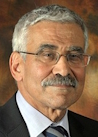
This is a lightly edited version of a speech given by Adnam Shihab-Eldin in the GAFG Energy Series.
Discuss in our Forums
See what other readers are saying about this article!
Click here to read & post comments.
About the Author
Adnan Shihab-Eldin is a former OPEC Secretary General. He is a
Kuwaiti physicist, energy economist, and academic. Currently a Senior
Visiting Research Fellow at the Oxford Institute for Energy Studies and a
founding board member of the Kearney Energy Transition Institute. He
also serves as the GAFG Steering Board Chair.




 reddit this
 Del.icio.us
 Seed Newsvine
 StumbleUpon