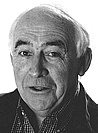
Musk was quoted on the ABC's 7:30 program broadcast on 21/5/15. Reporter Lee Sales enthused "Imagine life without that dreaded quarterly power bill. That could be around the corner for people with solar panels. Until now, solar energy couldn't be stored efficiently and people who had it relied on the electricity grid for backup. Now, new battery technology means that could change."
That technology is the Tesla battery. I have a few reservations, but this sounds like good news to me. Since 1997 solar panels have become quite a bit cheaper, more efficient and longer lasting. Batteries are the most expensive component in our system, and I'll look forward to paying substantially less when my current battery bank expires - probably in about ten years. Come to think of it, I'll probably expire before they do.
Unfortunately, cheap panels and batteries are only a partial solution. Musk is not quite correct when he tells us that the Sun "shows up every day"- it doesn't. Recently we had more than a fortnight where it rarely put in an appearance, and that's not uncommon in many areas of Australia. That's why a well designed solar system will include batteries that hold at least three days power supply - preferably five. Until now, as Lee Sales points out, solar energy can't be stored efficiently.
Advertisement
The ABC report went on to talk with residents who have a 5 kilowatt system. We get by on 2 kilowatts, and the thought of having to install batteries that are more than twice the capacity of ours is scary. People connected to the grid seem to be more prolific users of power than we are.
We have backup, of course - a petrol generator to last us through the dark times. It makes for expensive power, but at least we have it.
If you're connected to the grid, it's a different story. The grid takes the place of our generator. It does away with the need to store enough energy to last you through stormy weather. To top it off, in
good weather you sell your excess power back to the supplier. You'd be silly not to take advantage of an offer like that! The power companies will continue to provide the energy security that you demand.
At a cost! Not your cost, as things now stand, although that might have to change.
The power companies have to provide the infrastructure needed to deliver and receive power from your premises. Already we are seeing evidence of certain areas running out of the capacity to provide this service, and some consumers who install panels are unable to sell their excess back to the power company.
Advertisement
In the USA, power companies are experiencing a phenomenon known as the cost-shift cycle: Some consumers install panels, fewer customers are left to pay for the infrastructure, utilities lose revenue, and have to buy electricity at an inflated price, they pass the increased costs on to fewer consumers, who as a result install panels…and so it goes. It seems fair to expect the users of panels, who are now suppliers of electricity as well as consumers, to pay their share, possibly even an increased share, of the cost of infrastructure. Utilities may be forced to impose a connection fee - and so they should.
The utilities also need to provide the backup generating capacity to ensure supply at all times. The spread of solar panels and wind farms does not reduce the need to keep an equivalent amount of backup generation, capable of virtually instant availability. Such generation will require the use of more expensive forms of generators. Who should pay for these increased costs? I have to pay RRP for my generator and the fuel it consumes.
This fact also means that the greenhouse effect claimed to justify these schemes is over estimated, even illusory.
Discuss in our Forums
See what other readers are saying about this article!
Click here to read & post comments.
35 posts so far.




 reddit this
 Del.icio.us
 Seed Newsvine
 StumbleUpon